

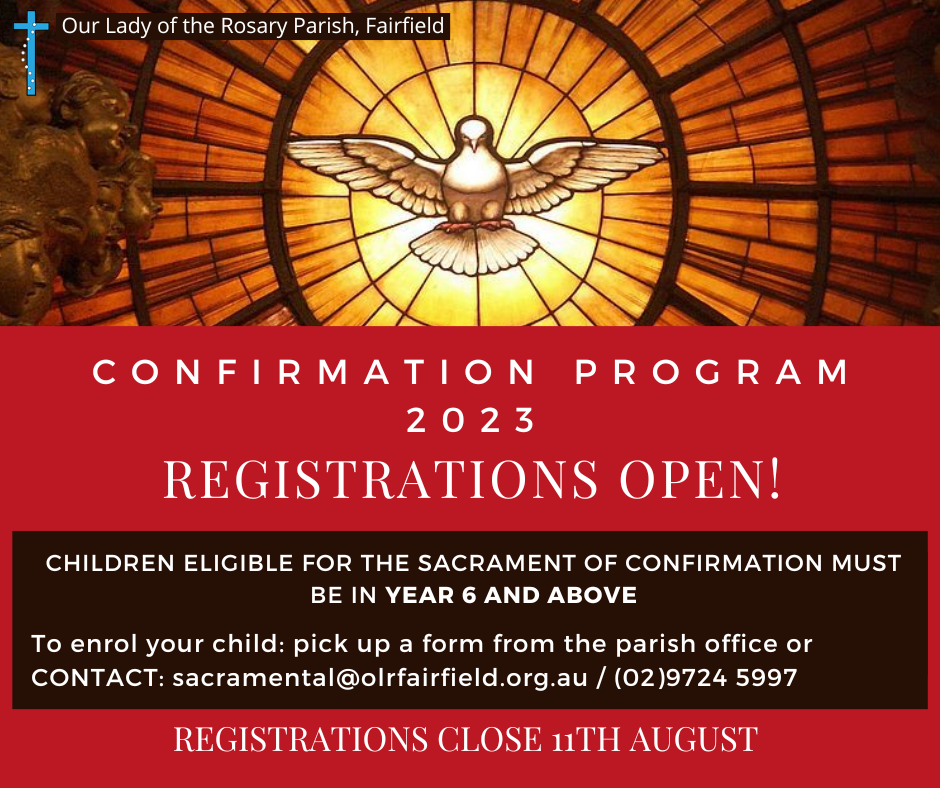
Confirmation Enrolment
The Confirmation enrolment form is attached, with all the relevant dates for your information. It needs to be completed and handed back to the Parish office along with payment of fees by August 11th or emailed to: [email protected]
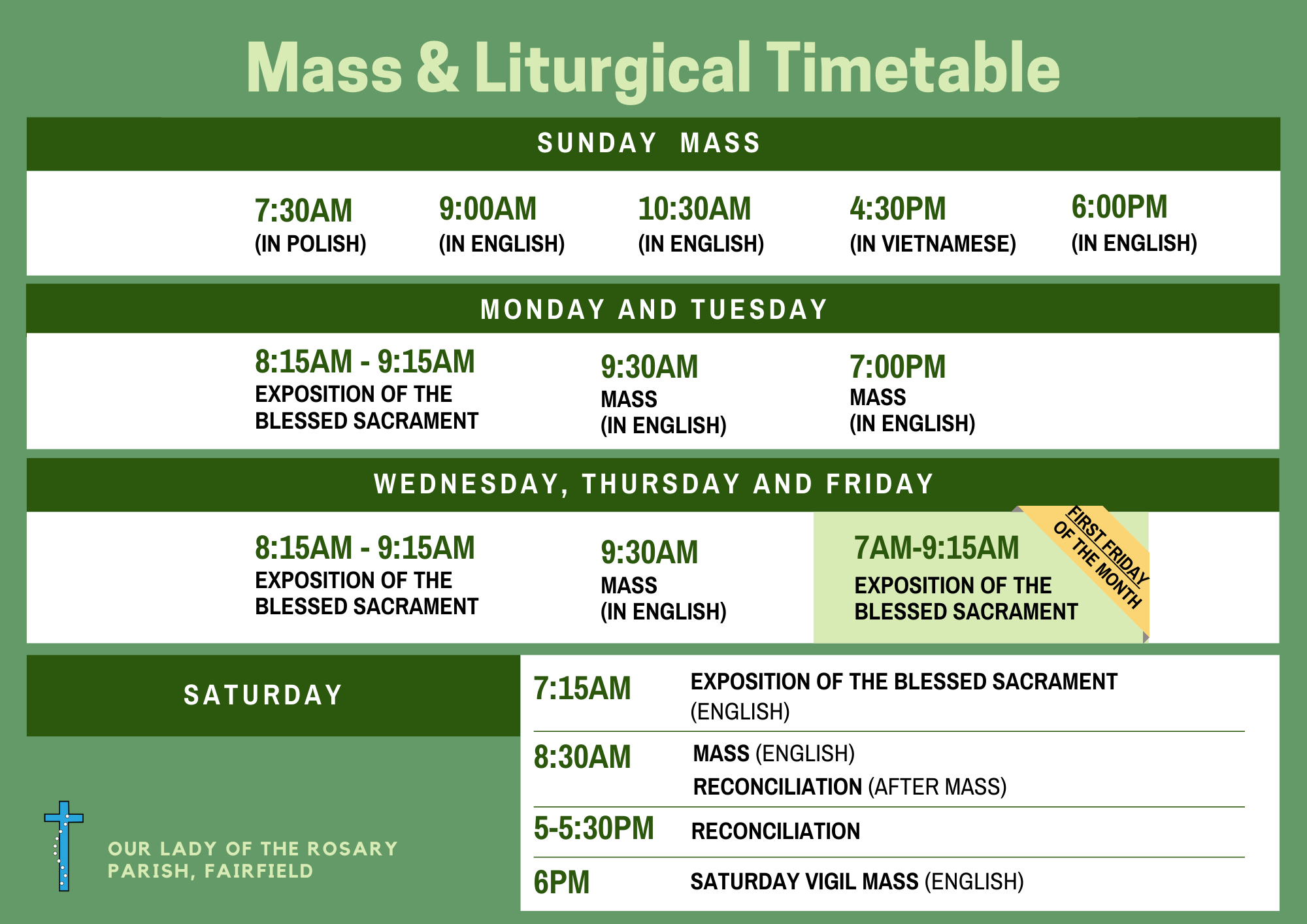
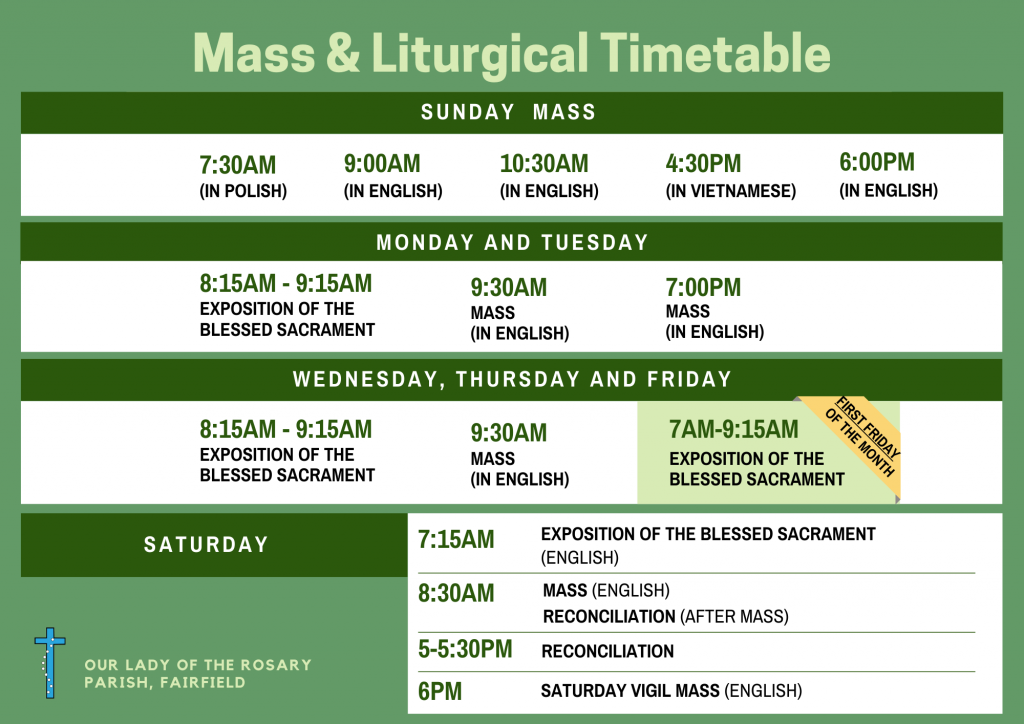
Mass Timetable
RENEWAL SESSION
If you wish to volunteer at a Mass please contact Liturgy Coordinator Philip Pham at: [email protected] or 0433 165 160
During weekdays, the following activities will continue:
- Confession Saturdays 5pm-5:30pm OR by appointment
- Baptisms, Weddings, and Funerals can still take place within the limited number in the assembly permitted;
- Rooms in the Parish’s facilities can still be made according to the relevant restrictions.
Please read: Letter from Archbishop Anthony Fisher
Please read: Announcement before Mass by Priest
Advice to parishes – covid-19-safety-plan 10 July 2020
Pages: 1 2